“Aomame” and “Hanamame”: Tables Made from Offcuts of Small-Diameter Lumber
Overview
Creating products that make the most of the potential of scrap materials
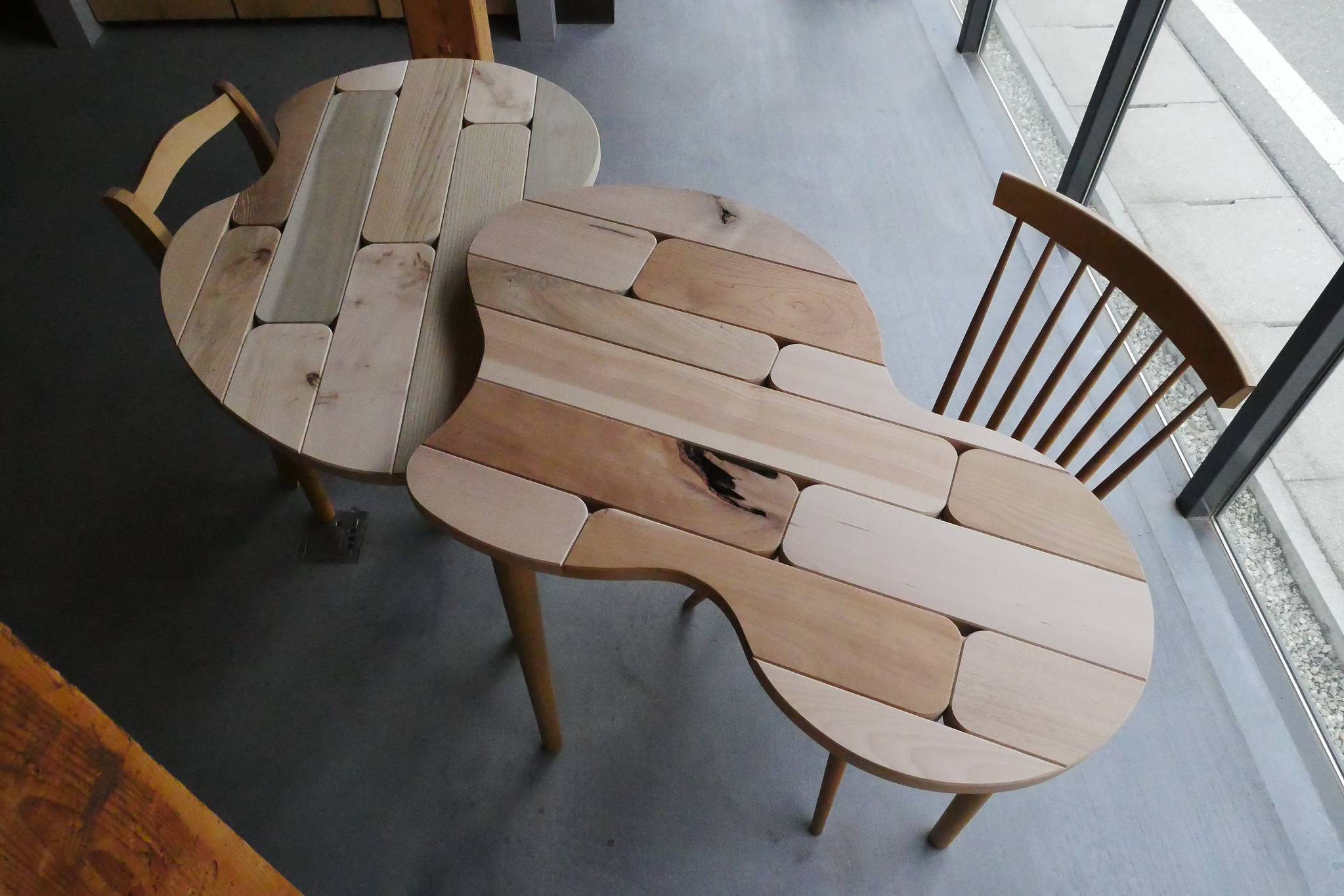
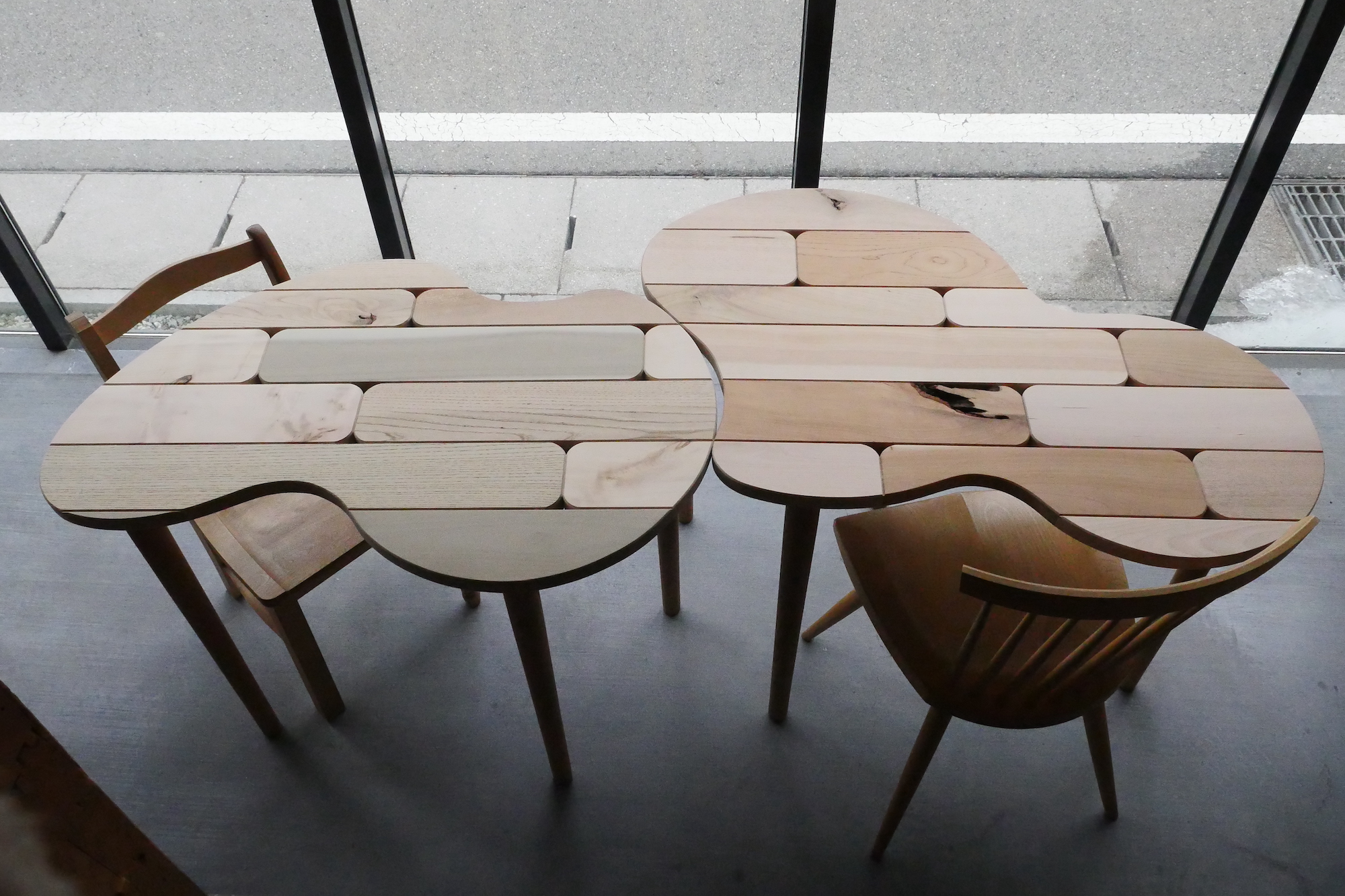
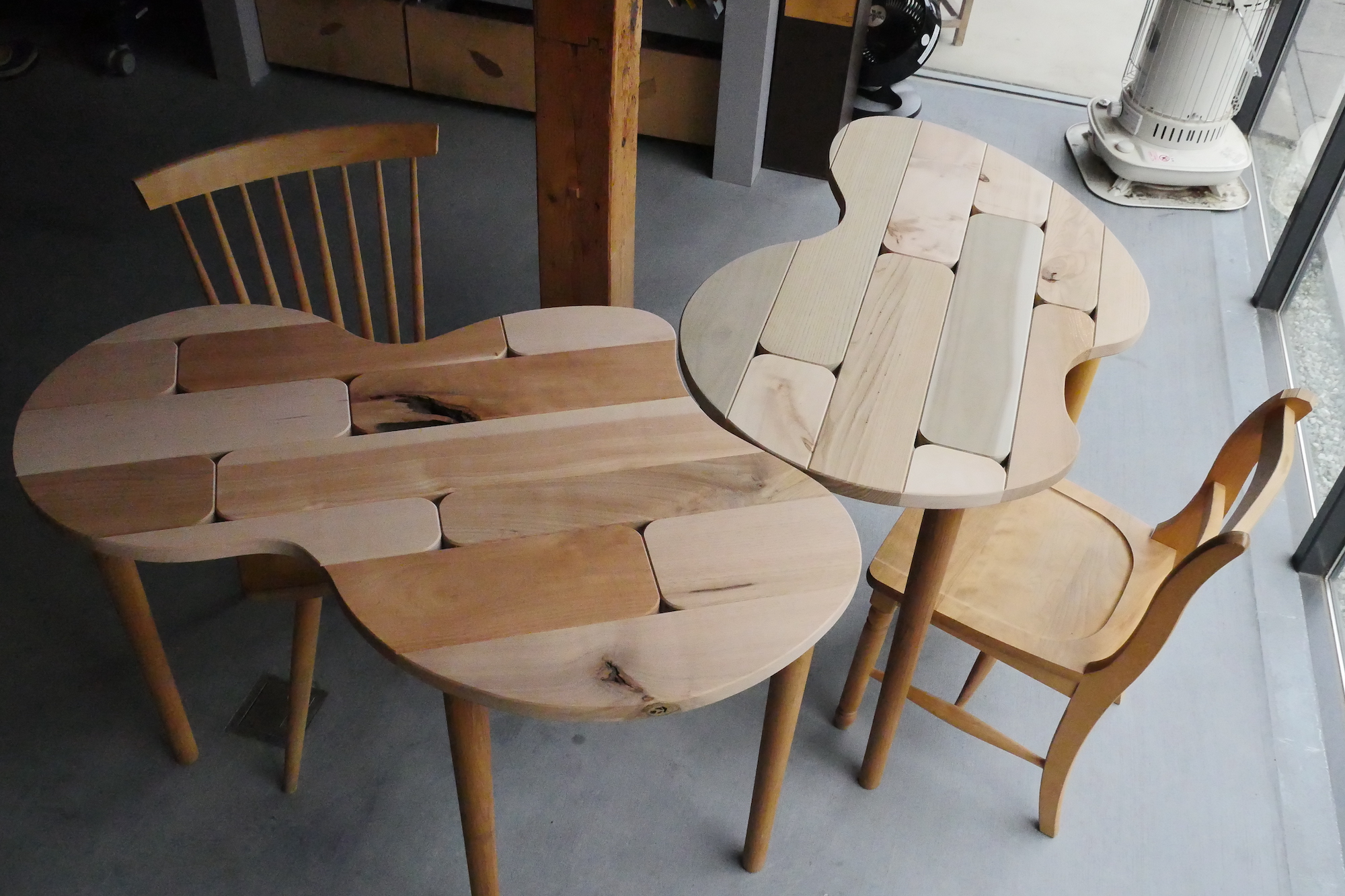
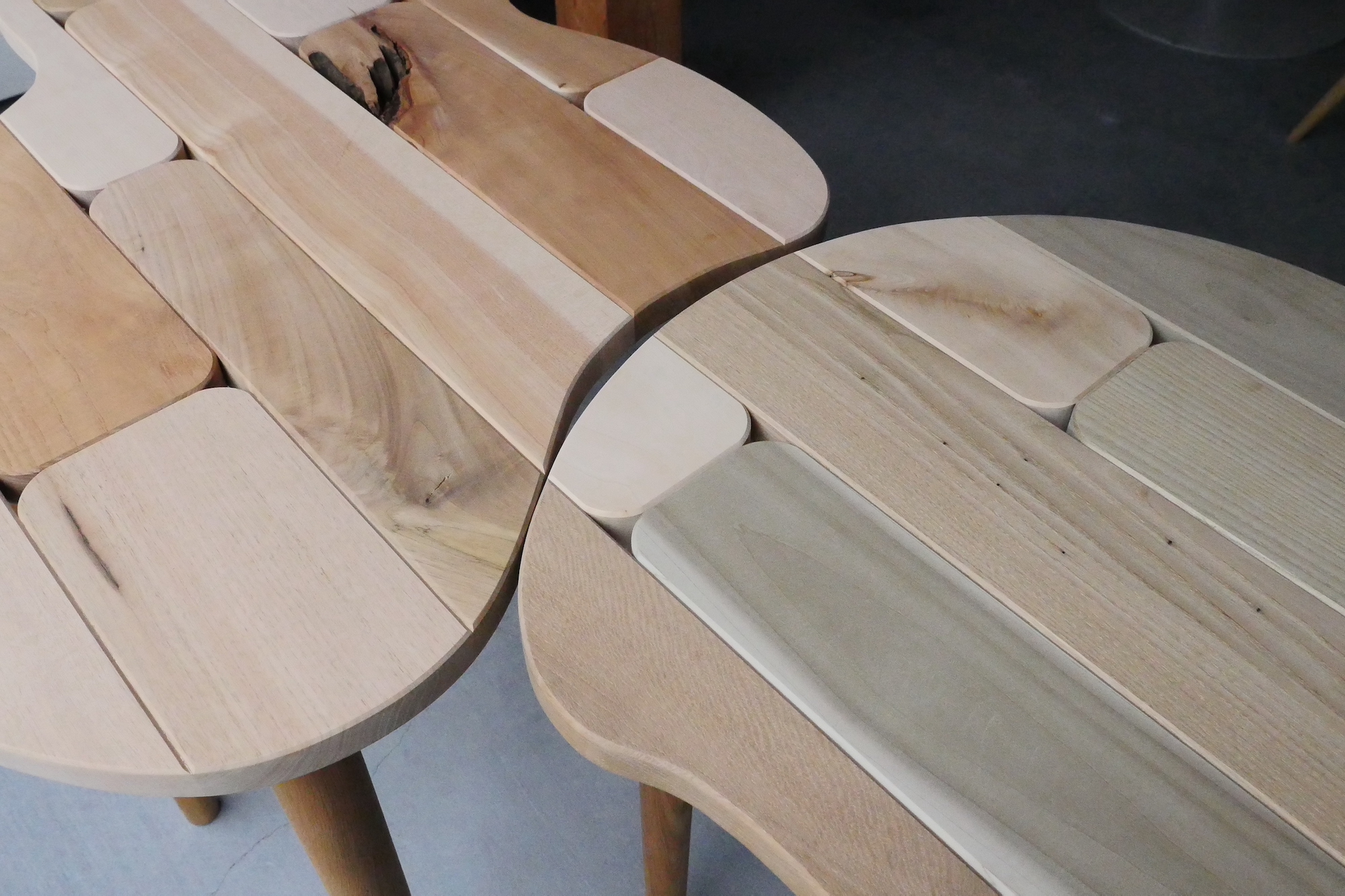
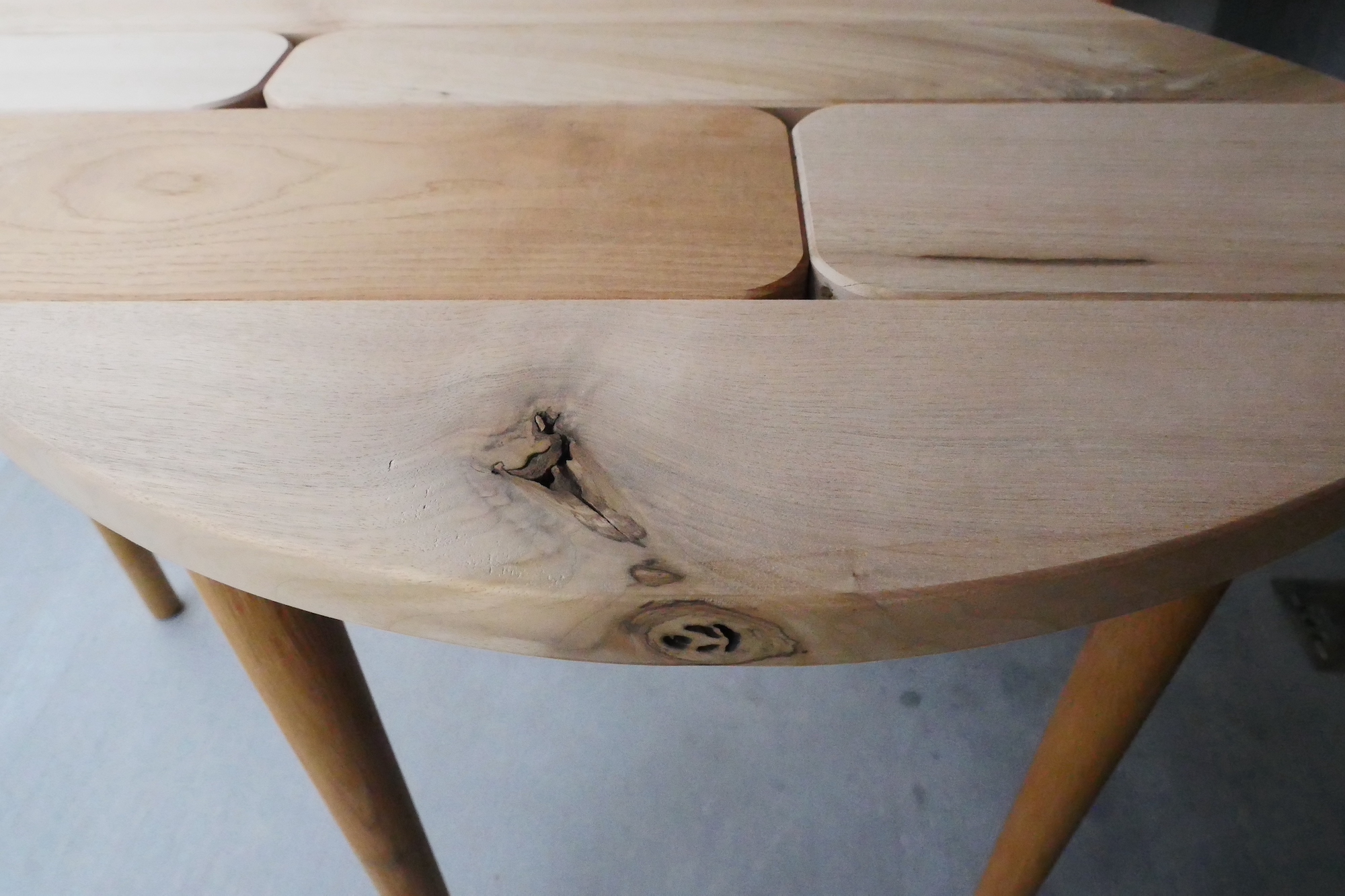
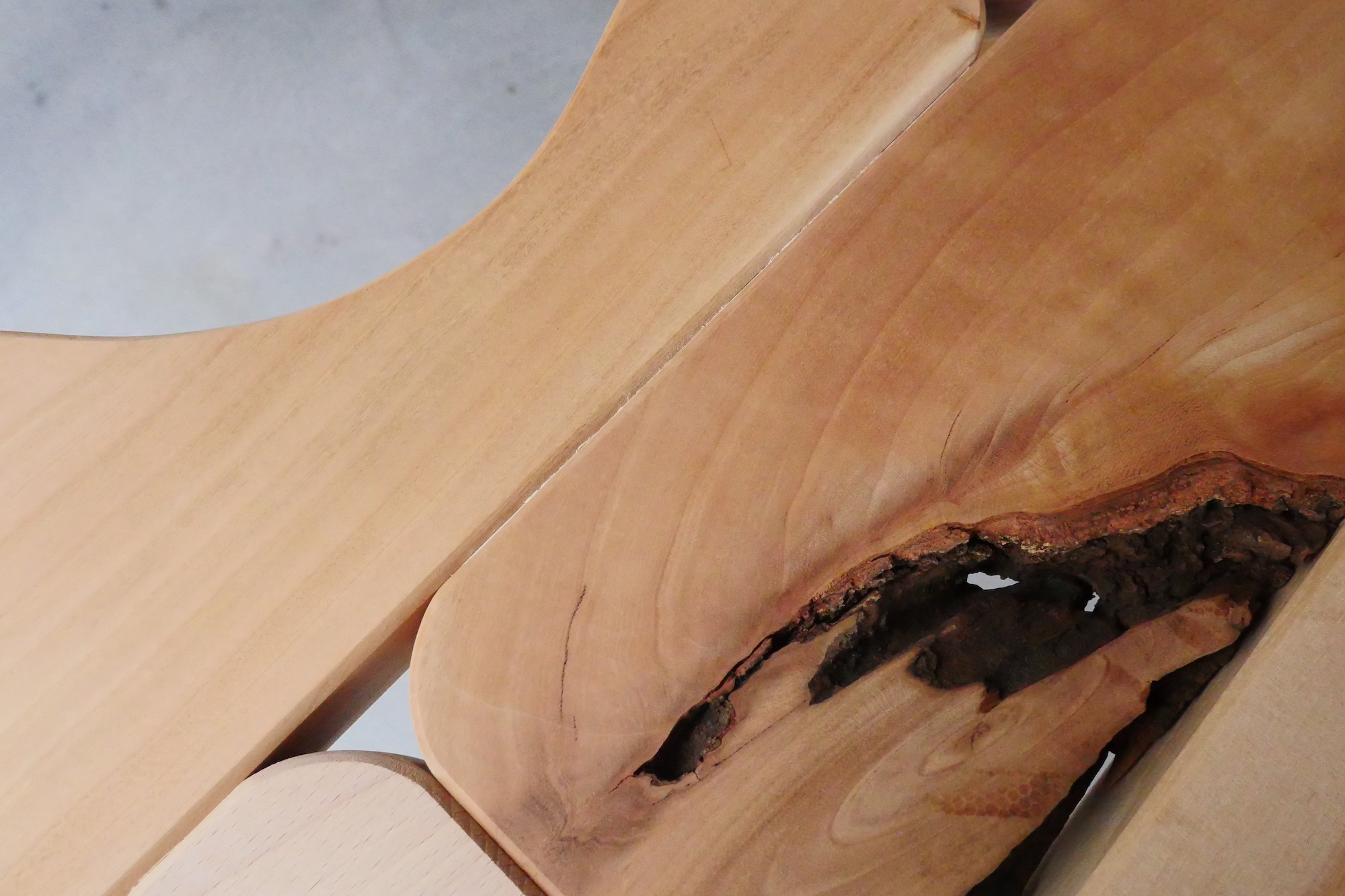
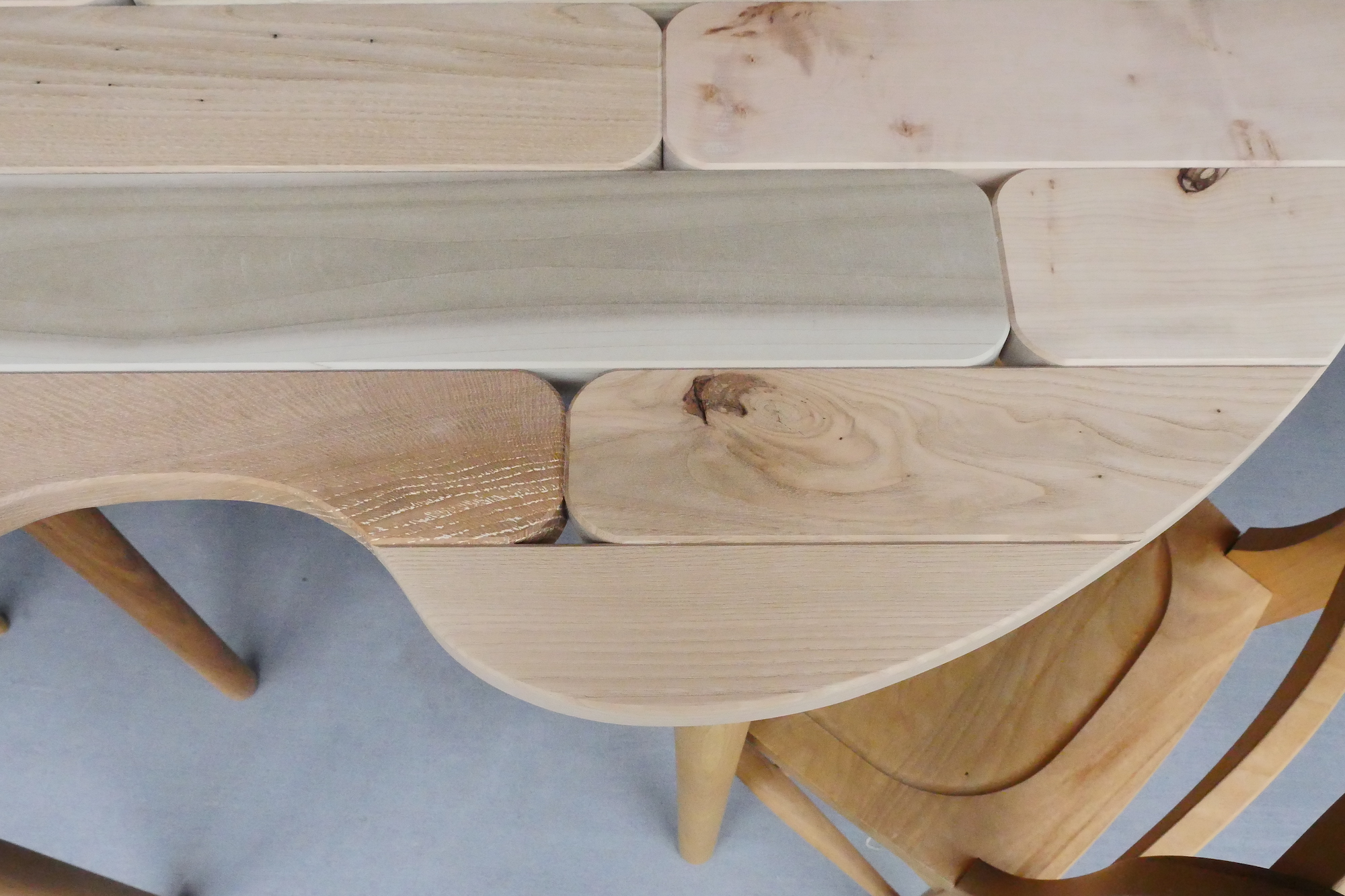
Two tables composed of small planks from as many as 11 different broadleaf tree species—including beech, Japanese white oak, chestnut, magnolia, and wild cherry—joined together. These tables, featuring a series of unique curves along their outer edges, are named “Aomame” and “Hanamame.” While their shapes are striking, it is the individual characteristics of the planks—such as their grain patterns and knots—that truly catch the eye.
These tables are a project from the Takuto Yamamichi Laboratory in the Department of Architecture at Hosei University’s Faculty of Design and Engineering. Supervised by Mr. Yamamichi and Mr. Rugo Itasaka (architect and educational technician in the Department of Urban Environmental Design Engineering at the same faculty), the project was conducted as a competition open to volunteers within Hosei University. Ultimately, the design was created by Mr. Kiō Oiwa from the Department of Architecture and Ms. Mitsuo Moritani from the Department of Urban Environmental Design Engineering.
Reflecting on how to bridge the gap between people and the forest in urban life—which, when traced back to its roots, is connected to the forest in various ways—the designers created a table composed of small, distinctive planks.
These small planks are, essentially, scrap wood. Scrap wood is generated, for example, when cutting furniture-grade boards from a single log; these are the parts discarded due to factors such as strength requirements. However, they often feature unique grain patterns and textures.
One of the challenges of this project was to create a product that maximizes the potential of these offcuts. Beyond just their appearance and texture, the corners of each piece were rounded in advance to ensure that, even if the pieces shift due to differences in wood species, no sharp edges would protrude.
During production, the team members visited Hida to consult with local artisans on the arrangement of the boards and the extent of processing required. Each member developed a deep affection for the wood; at times, they watched the artisans’ work intently, and at other times, they joined in the process, ultimately bringing the table to completion.
Project The “R” and its placement highlight the wood's unique character
| What we did | Wood Coordination Furniture Design and Manufacturing Furniture Production Management |
|---|---|
| Credits | 1, |
| Period | April 2021–February 2022 |
Viewpoint The Perspective of Takuto Yamamichi, Department of Architecture, Faculty of Design and Engineering, Hosei University
Tsubame Architects
This time, we began by discussing the state of Japan’s forests. From there, we addressed a vast number of variables, such as what materials to use, where those materials would come from, the production process, and how to account for changes over time, such as shrinkage due to drying.
By approaching design from this perspective, the students likely realized—before they even knew it—that the lines they were drawing were restructuring resource networks, shifting their own stance toward the environment, and serving as guide lines for their thinking. Furthermore, to ensure these ideas didn’t remain mere fantasies, they engaged in repeated, candid discussions with those in the field, which finally led to the creation of actual products.
In 2022, we plan to set even more challenging themes and continue these activities.